Friday, July 20, 2007
Overturning bad Precedents by Impeachment
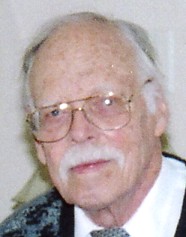
Bruce Fein, who was an assistant Attorney General in the Reagan administration and who drew up some of the articles of impeachment against Bill Clinton, has stated his reasons for having impeachment hearings in the House of Representatives against George Bush. Mr. Fein clearly loves the constitution and his reason for impeaching George Bush is that Mr. Bush has established several dangerous precedents. These precedents must be destroyed lest future Presidents use them. The way to destroy the precedents is to hold impeachment hearings based on these precedents. It must be made clear to all future Presidents that these acts were and are illegal under the constitution and that the current President must be impeached for committing them.
Our constitution is more than the mere 25,000 or so words in the document. It is also a long series of court cases which establish precedents in law, and a long series of Presidential acts that have not been challenged by either Congress or the courts. I can think of two or three important precedents:
Marbury vs. Madison: This case established the power of the federal courts to void acts of Congress and the President as being unconstitutional.
Tyler's Ascendance to the Presidency: The constitution did not stipulate that when a President left office in mid-term (e.g., through death or impeachment) that the Vice President then became President. It stipulated only that the duties of the President would be carried out by the Vice President. The unstated implication was that Congress would by law establish a means of choosing a new President, such as by special election. After the death of President Harrison in 1841, Vice President John Tyler insisted on being sworn in as President, thus establishing the precedent that the Vice President actually becomes President when the President dies, is disabled, or otherwise can not act as President.
Roosevelt and the Navy’s Tour: President Theodore Roosevelt decided to show the world that the United States wielded a big stick by sending the Navy on a tour around the world. At the time there was money appropriated by Congress sufficient only to allow the Navy to steam half way around. Roosevelt sent the Navy off anyway, arguing that if Congress wanted to leave the Navy on the other side of the world it could do so. Of course, Congress had to appropriate the additional money to enable the Navy to complete the tour. The President established the precedent that even the Congressional power of the purse does not prevent the Commander in Chief from doing what he pleases with the armed forces.
President Bush has established, or has tried to establish these and other precedents:
- The power to prevent members of executive departments from testifying before Congress;
- The power to listen to telephone conversations between Americans without warrants;
- The power to designate persons, even American citizens, as enemy combatants and to hold them in prison indefinitely without habeas corpus or a fair trial;
- The power to weaken or change the intent of a law by issuing a signing statement at the time he signs the bill into law in which he expresses his understanding of the law and his intent about enforcing it.
Mr. Fein argues that Congress must act now, during Mr. Bush’s term of office, to void these precedents. A way to void them is to impeach the President and the Vice President for doing these things. If nothing is done during Bush’s remaining term, the next President, whoever he or she may be, will be able to exercise these powers and will claim that the President has the implicit authority as Commander in Chief to do so, following the custom of his or her predecessors. Mr. Fein wonders whether Republicans want a future president Hillary Clinton to have the powers that Mr. Bush has illegally claimed for himself. If not, they should urge the impeachment of the President now.
Labels: bad precedents, Bruce Fein, dangerous precedents, George Bush, Hillary Clinton, impeachment, James Madison, Theodore Roosevelt


Saturday, July 14, 2007
About Impeachment
Last night I watched the PBS program "Bill Moyers' Journal." Bill had Bruce Fein and John Nichols discussing the proposition that President Bush and Vice President Cheney should be impeached. I had previously thought that impeachment of those two now would be like locking the barn door after the horse was stolen. Mr. Fein, in particular, presented a compelling case in favor of impeachment.
His argument is that the Bush administration has committed several offenses against the federal constitution: warrantless wire taps, denial of habeas corpus for the prisoners at Guantanamo, lying to Congress, refusal to allow administration members to testify to Congress, and so on. It is very important to Mr. Fein that these unconstitutional and illegal practices should not become precedents for future presidents to use. He asked, do we want a President Hillary Clinton, a President Rudy Giuliani, a President McCain, a President Edwards, or any other ambitious politician from having these powers? If not, we should now take action to censure the current President for doing these things. We must have the House draw up and pass a bill of impeachment in which these crimes are itemized. We will thus make it clear that future Presidents are forbidden to act as unaccountable monarchs rather than elected and accountable presidents.
I must say that his argument convinced me. Although the horse is gone, we can recover the saddle, the reins, and the buggy. Future Presidents must be made to understand that the Presidency is not unaccountable and must respect and cooperate with the Congress.
Now, where do I go to sign a petition for impeachment?
Labels: Bruce Fein, impeachment, John Nichols, lying to Congress, precedent for future presidents, warrantless wire taps